Remote and hybrid work are often framed as more flexible, more accessible and more inclusive.
And in many ways, they are.
Flexible work has opened doors that traditional office-based models often kept closed. It can support people with caregiving responsibilities, health needs, disabilities, neurodiversity, different energy patterns, or simply different ways of doing their best work.
But flexibility also changes how organisations interpret performance, trust, commitment and potential.
That shift matters.
When work becomes distributed, many informal workplace signals become weaker. People are no longer equally seen in the room, heard in passing conversations, or included in small moments where context and opportunity often travel.
In their place, other signals can start to carry more weight: responsiveness, meeting participation, office presence, communication style, or visibility in Slack and Teams.
The risk is that these signals become shortcuts.
Responsiveness becomes a shortcut for commitment.
Office presence becomes a shortcut for ambition.
Visibility becomes a shortcut for impact.
But some of the most valuable work is not always the most visible work.
The same flexible work policy can also create very different outcomes depending on role, manager, seniority, team culture, access to networks and existing levels of trust.
For someone already well connected, remote work may not significantly reduce visibility. For someone newer, earlier in their career, or less connected internally, the same flexibility may mean fewer informal learning moments, weaker sponsorship and less access to the conversations where opportunities begin.
That is why flexibility needs design.
The question is not only where people work. It is how opportunity moves through the organisation.
- How is performance evaluated?
- How is trust built?
- How do people gain visibility?
- How are opportunities distributed?
Flexibility does not automatically create fairness. Good intentions alone do not eliminate unequal outcomes.
Because flexibility is not always neutral.
And flexibility without design can quietly redistribute opportunity rather than expand it.
Read the full article on LinkedIn:
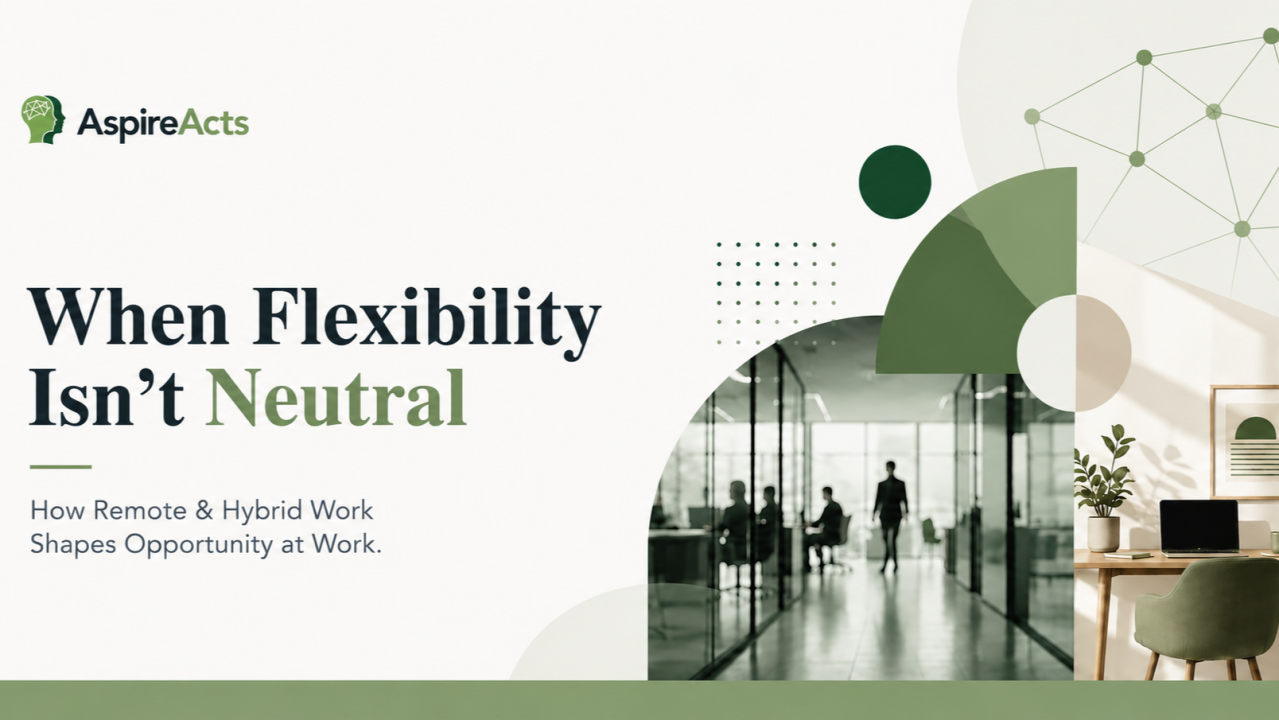
When Flexibility Isn’t Neutral: How Remote & Hybrid Work Shape Opportunity at Work